Creativity as a Transformative Force
Exploring creativity as a way of reconnecting with ourselves, each other, and the living world

Author’s note
This reflection arises from my work through Art for Healing, where I explore creativity as a way of reconnecting with ourselves, each other, and the living world — especially in times of personal, social, and systems change. My practice weaves together art-making, storytelling, and reflective spaces that invite imagination, care, and moral courage back into our shared work.
At times of profound uncertainty and systems change, creativity is often framed as a luxury — something to return to when the “serious work” is done. My work through Art for Healing has taught me the opposite. Creativity is not an add-on to transformation; it is one of its most essential forces.
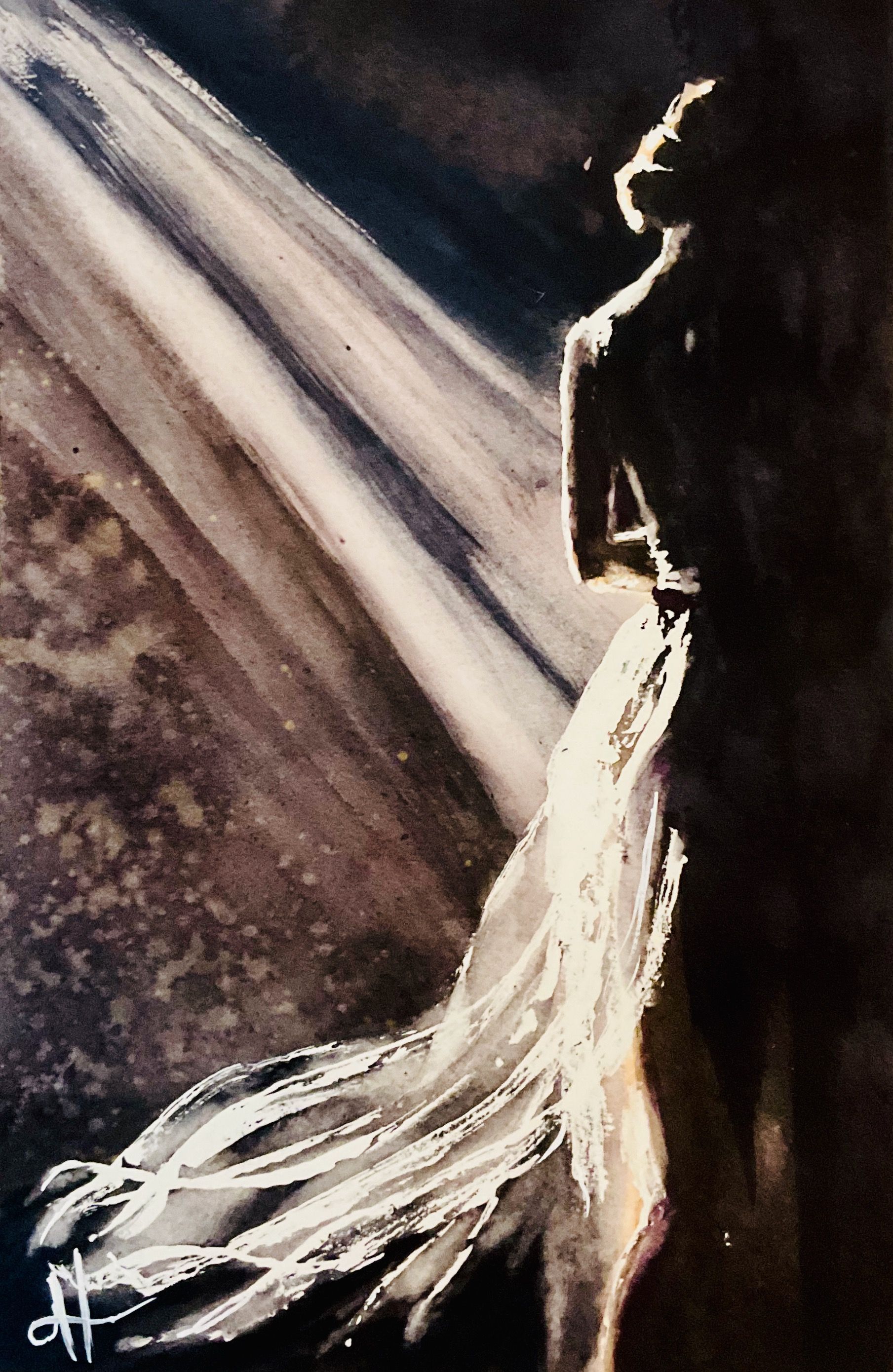
Creativity reconnects us to something deeply human. It reminds us that we are not only workers, consumers, or roles within a system, but sensing, imagining beings capable of perceiving beyond what already exists. In creative practice — whether through art, movement, making, or imagining — people often rediscover a sense of belonging to themselves, to one another, and to the living world. This reconnection is not abstract; it is felt, embodied, and quietly transformative.
A powerful example of creativity as a lifeline comes from Nazanin Zaghari-Ratcliffe, who was imprisoned in Iran for six years. During her detention, she sewed clothes for her young daughter using a shared prison sewing machine. In conditions designed to strip people of agency and dignity, creativity became an anti-oppressive force — a way of remaining inwardly free. While systems can remove external freedoms, they cannot take away imagination. Creativity kept her human, connected, and alive.
This same truth appears in peacebuilding. The scholar-practitioner John Paul Lederach describes peace not as something engineered through technique, but as something imagined into being. In The Moral Imagination, he argues that lasting change depends on our capacity to generate constructive possibilities that are rooted in the realities of violence and injustice, yet not bound by them. He suggests this capacity resembles an artistic process — one that listens deeply, works with uncertainty, and creates space for what does not yet exist.
My own understanding of creativity has also been shaped through art practice and study, particularly through Drawing on the Right Side of the Brain. Edwards describes creativity as a shift in modes of attention: from fast, language-based, symbolic thinking, to a slower, more perceptual and relational way of seeing. Artists learn to move beyond labels and shorthand, noticing tone, shape, space, and relationship instead. This shift is not only useful for drawing — it offers a bridge back into creativity for all of us.
Much of modern life trains us to live in strategic, analytical, survival-oriented modes of attention. Through Art for Healing, I see again and again how creative practice offers another way of knowing — one that allows the nervous system to settle, perception to widen, and new possibilities to emerge. In this sense, creativity shifts us from thinking about the world to being with it.
When we understand creativity in this broader way, its relevance for systems change becomes clear. Creativity is how we stay human inside broken systems — and how we begin to imagine more humane ones into existence.